
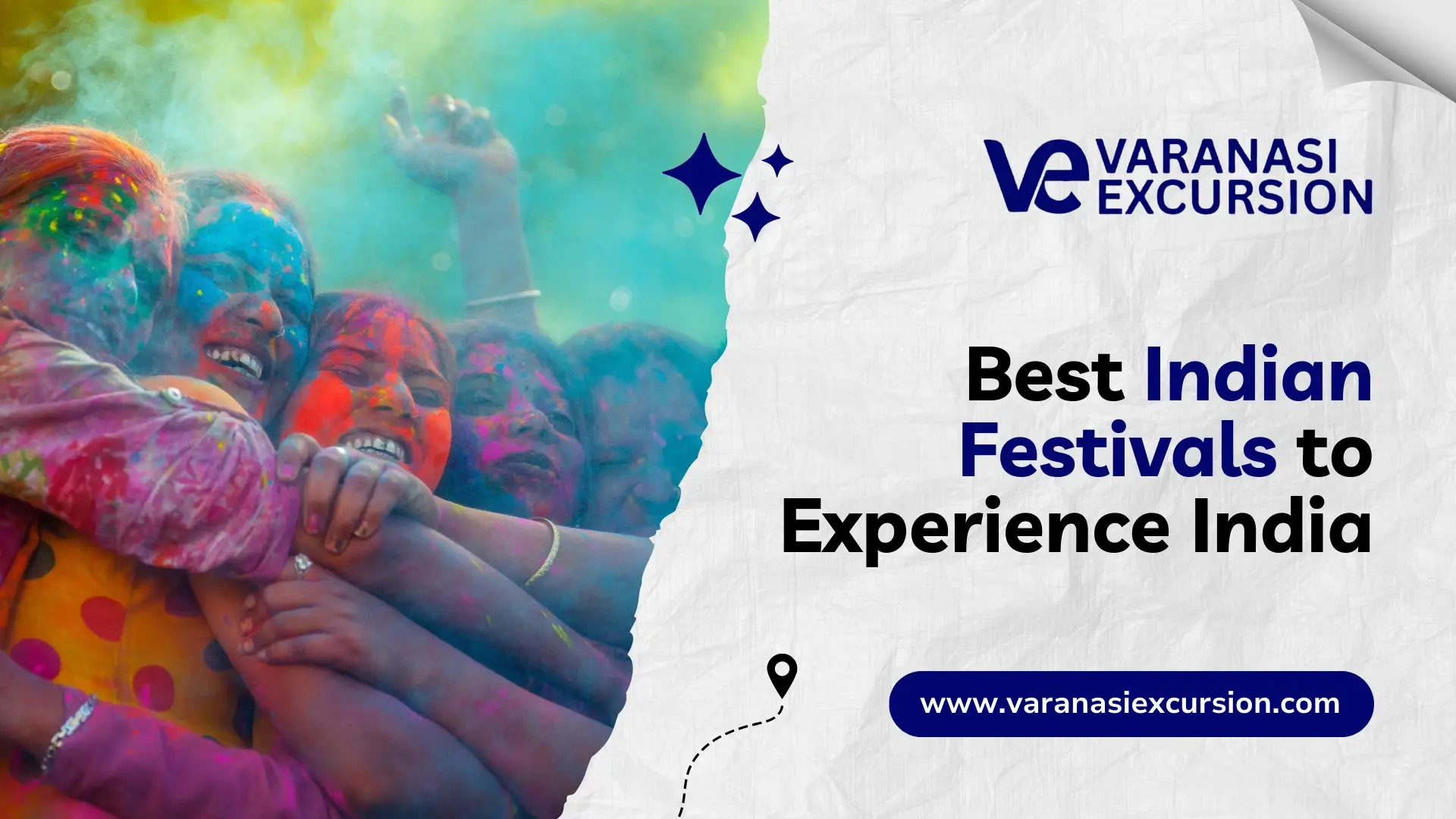
India is often known for its grand monuments and diverse landscapes. Yet many travelers discover something else once they arrive. The real heartbeat of the country often shows up during its celebrations. Almost every month, somewhere in India, streets come alive with music, colors, lights and traditions that have been passed down for generations.
For many visitors, experiencing festivals in India becomes the most memorable part of the trip. Picture yourself in the middle of the joyful chaos of Holi as bright colors fill the air. Or standing quietly by the ghats in Varanasi during Dev Deepawali while thousands of lamps reflect on the water. Moments like these do not feel like ordinary sightseeing. They stay with you long after the journey ends.
Festivals also reveal something deeper about the country. People from different religions, communities and regions join the celebrations with the same sense of joy. That shared energy is hard to describe until you see it yourself. The writer Mark Twain once said, “India is the cradle of the human race”. When you witness its festivals, that depth of culture becomes very real.
Each celebration carries its own story. Some mark the harvest season. Others honor gods and ancient legends. Some simply bring communities together to celebrate life. From colorful festivals like Holi to massive spiritual gatherings such as Kumbh Mela, every event offers a different window into Indian culture.
In this guide, you will explore some of the most famous festivals in India that travelers should experience at least once.
Why you should experience festivals in India
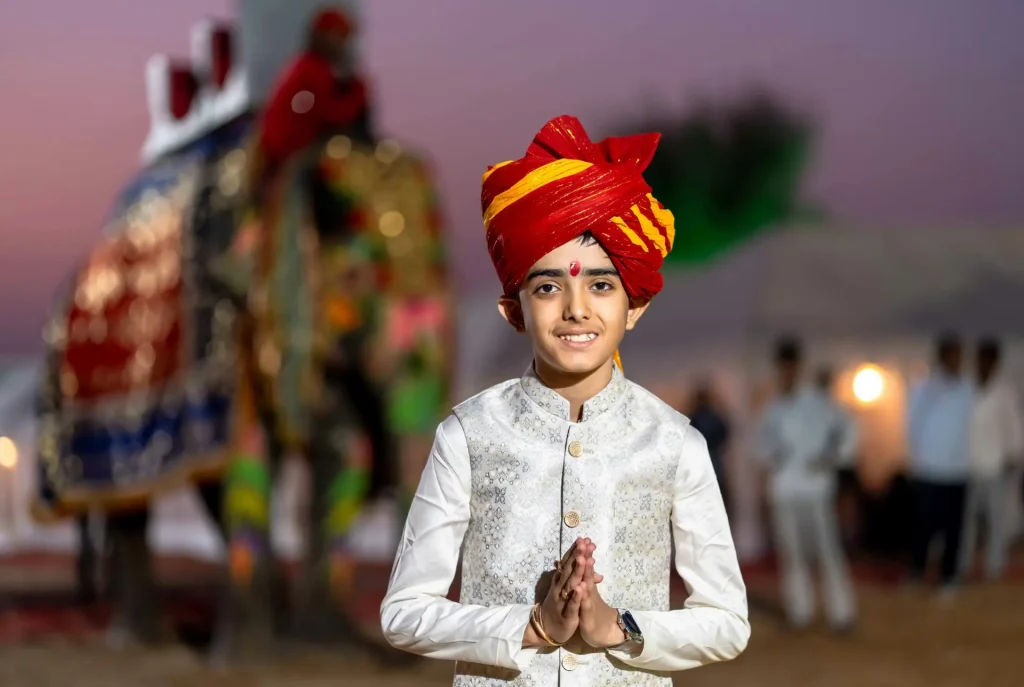
Traveling in India during festival season feels completely different from a regular trip. Cities become more colorful, music fills the streets and people celebrate with a level of energy that is hard to describe until you see it yourself. This is why many travelers say that the best way to understand the country is by experiencing its festivals.
One reason to go to festivals in India is the strong sense of community. During celebrations, families invite neighbors and even strangers to join the festivities. People often greet visitors with sweets, traditional food and warm smiles. That kind of hospitality leaves a lasting impression on many travelers.
Another reason travelers love festival experiences is the feeling of joy and togetherness. During these celebrations, barriers disappear. Locals and visitors celebrate side by side, sharing laughter, music and food. As the writer Rudyard Kipling once wrote, “India is the one land that all men desire to see”. Festivals are one of the reasons why that statement still feels true today.
Famous festivals in India you must experience
India celebrates hundreds of festivals each year and every celebration tells a story about its culture and traditions. Some bring streets alive with colour and music, while others create a calm spiritual atmosphere.
For travelers, festivals offer a wonderful way to understand the country. From the colours of Holi to the lights of Diwali and the massive gathering of Kumbh Mela, each one leaves a lasting impression.
Here are some of the most famous festivals in India that every traveler should experience at least once.
Holi: The festival of colours in India
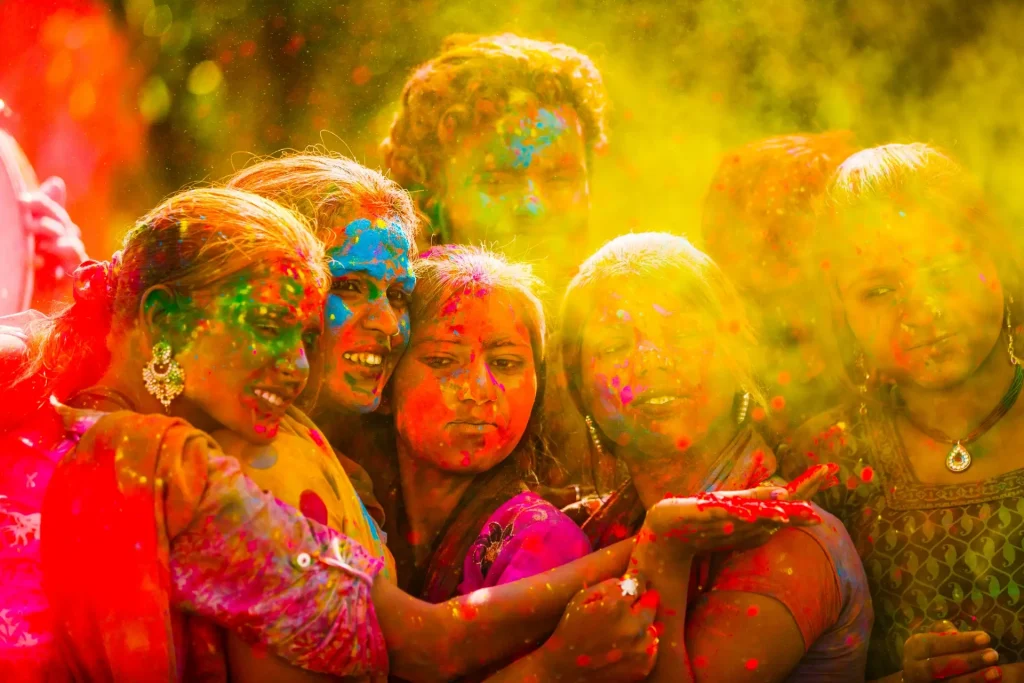
Holi is one of the most popular festivals of India. Also known as the festival of colours. At this lovely festival, family and friends gather to sing, dance and play with colours (gulal). Holi is played by throwing dry and wet colours on each other.
On Holi, a special sweet known as Gujiya was prepared and enjoyed by everyone with some other food too, such as Thandai, pakora and dahi bhalla.
As per mythology, it is said that Lord Brahma blessed the king Hiranyakashyap with immortality, which turned him arrogant. He wanted the people to worship him, but his son Prahlad became a devotee of Lord Vishnu.
So Hiranyakashyap tried to kill his son with the help of his sister Holika. Holika had a boon that protected her from fire. Hiranyakshyap asked her to sit on the fire with Prahlad in her lap. However, the plan failed as Lord Vishnu saved Prahlad while Holika was burned. After that, Hiranyakashyap was killed by Lord Vishnu’s Narasimha Avatar.
Because of this mythological story, Holika Dahan is performed by lighting a bonfire a day before Holi. This symbolizes the victory of good over evil.
Best places to experience Holi in India
- Mathura
- Vrindavan
- Barsana
- Jaipur
Interesting facts about Holi
- Ancient natural colors: Traditionally, Holi colors were made from turmeric, neem, palash flowers and herbs known for their natural healing properties.
- Lathmar Holi tradition: In Barsana, women playfully hit men with sticks during Lathmar Holi, recalling stories of Krishna visiting the village.
- Holika Dahan ritual: The festival begins with a bonfire that symbolizes the victory of good over evil.
- Welcoming spring: Holi marks the arrival of spring and the end of winter across many parts of India.
Dev Deepawali: The festival of lights in Varanasi
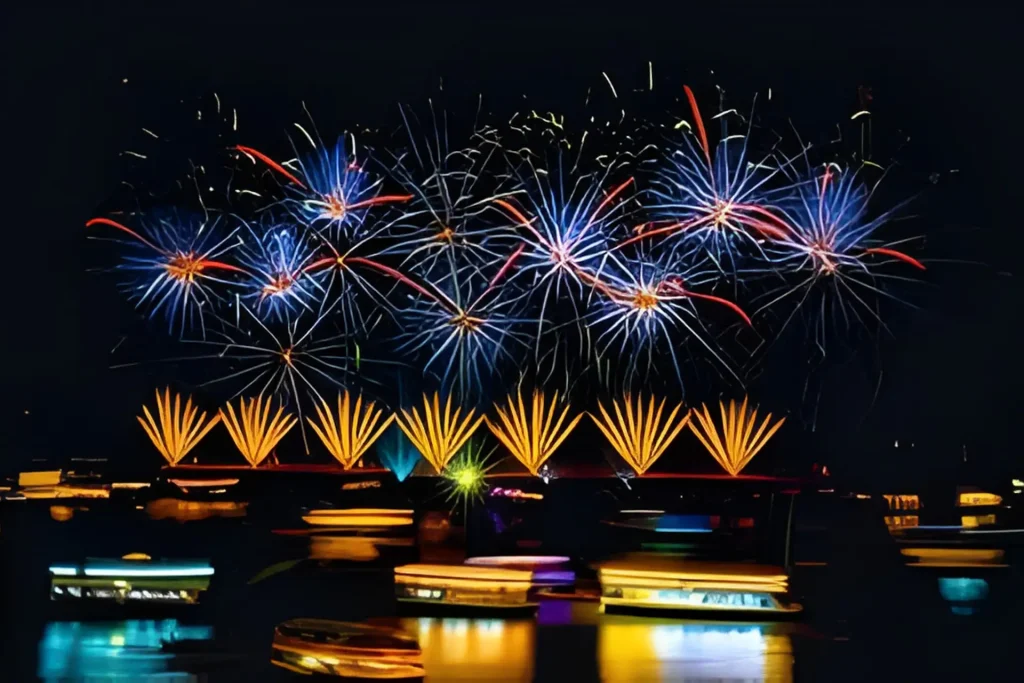
Dev Deepawali is one of the most beautiful festivals celebrated in India. Dev Deepawali is also known as the “Diwali of the Gods”. This festival is celebrated 15 days after Diwali on Kartik Purnima, the full moon night of the Hindu month of Kartik.
As the evening approaches, the ghats start glowing. Millions of diyas are lit along the ghats and within minutes the entire stretch looks like a sea of flickering light. Priests do rituals while devotional songs and chants fill the air. Standing beside the holy Ganges during this moment feels less like watching a festival and more like witnessing a tradition that has been alive for generations.
In 2020, Prime Minister Shri Narendra Modi inaugurated the laser show at Chet Singh Ghat. Since then, this 45-minute show and massive fireworks display has become one of the most talked-about highlights during Dev Deepawali.
The origins of Dev Deepawali come from Hindu mythology. It is believed to mark Lord Shiva’s victory over the demon Tripurasura, who had troubled the three lokas, i.e., Swarga loka, Bhuu loka and Pataal loka. According to the Shiva Purana, the devas came to Kashi to celebrate the victory of good over evil, which started this sacred festival tradition.
Best places to experience Dev Deepawali
- Varanasi
Interesting facts about Dev Deepawali
- Divine timing: It is believed that the gods descend to Earth on this night to bathe in the sacred Ganges River.
- Million diyas: More than 10 lakh diyas are lit across the ghats of Varanasi during the celebration.
- Grand Ganga Aarti: Priests perform a massive Ganga Aarti with large brass lamps and the sound of conch shells.
Global attraction: Known as the “Diwali of the Gods,” the festival attracts travelers from around the world.
Navratri and Durga Pooja
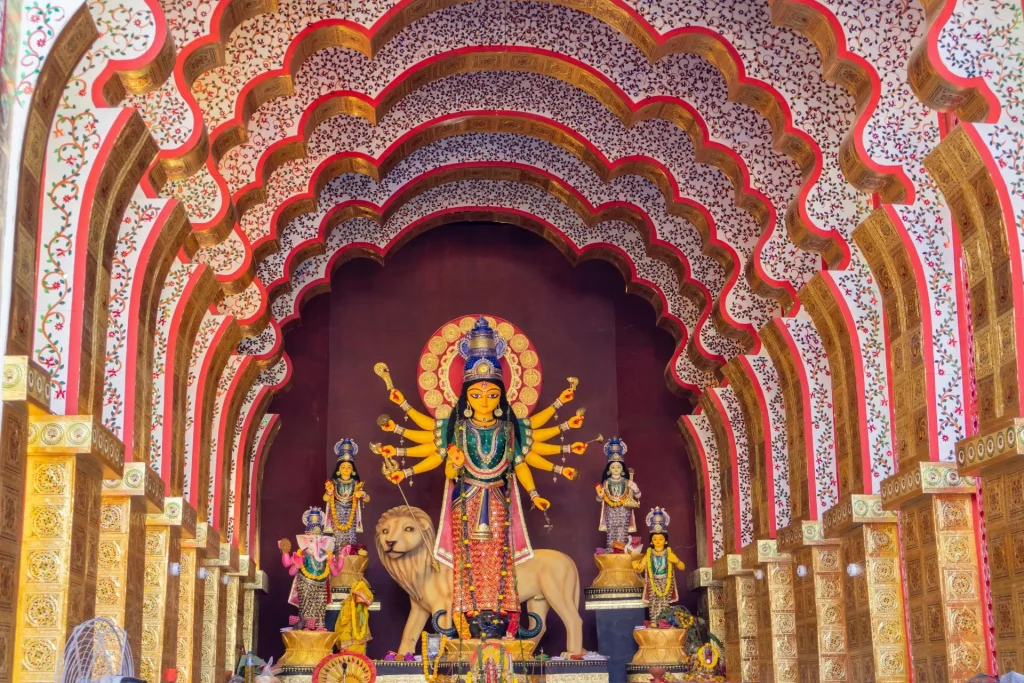
Durga Puja is one of the major festivals in India, especially celebrated in the northern and eastern parts of the country. In many northern states, the nine-day festival is observed as Navratri, while in West Bengal it is widely known as Durga Puja and celebrated with great devotion.
The festival marks the victory of good over evil. According to Hindu mythology, Goddess Durga defeated the demon Mahishasura, who had created fear across the three lokas, i.e., Swarga loka, Bhuu loka and Pataal loka. It is believed that Lord Brahma gave Mahishasura a boon that no man or god could defeat him. To end his terror, Goddess Durga fought a fierce battle and finally defeated him.
Because of this story, the festival is celebrated for nine days and ends on the tenth day, known as Vijayadashami. During these days, devotees worship the nine forms of Durga and take part in prayers and celebrations.
In northern India, many people keep fast during Navratri and break it on the eighth or ninth day. In West Bengal, the festival is celebrated with large decorated pandals where people gather to pray, sing and enjoy festive food together.
Best places to experience Navratri and Durga Puja
- Kolkata
- Ahmedabad
- Vadodara
- Varanasi
Interesting facts about Navratri and Durga Puja
- Nine nights, nine forms: Each night honors a different form of Durga, including Shailaputri, Brahmacharini, Chandraghanta, Kushmanda, Skanda Mata, Katyayani, Kalaratri, Mahagauri and Siddhidatri.
- Fasting for wellness: The fasting, which involves a satvik diet (no onion and garlic) during Navratri as a form of spiritual and seasonal detox.
- Garba and Dandiya nights: In Gujarat, people celebrate the festival with energetic Garba and Dandiya dances late into the night.
- Symbolic power: The goddess is often shown with 10 arms holding weapons gifted by various gods, symbolizing divine strength.
Christmas in India
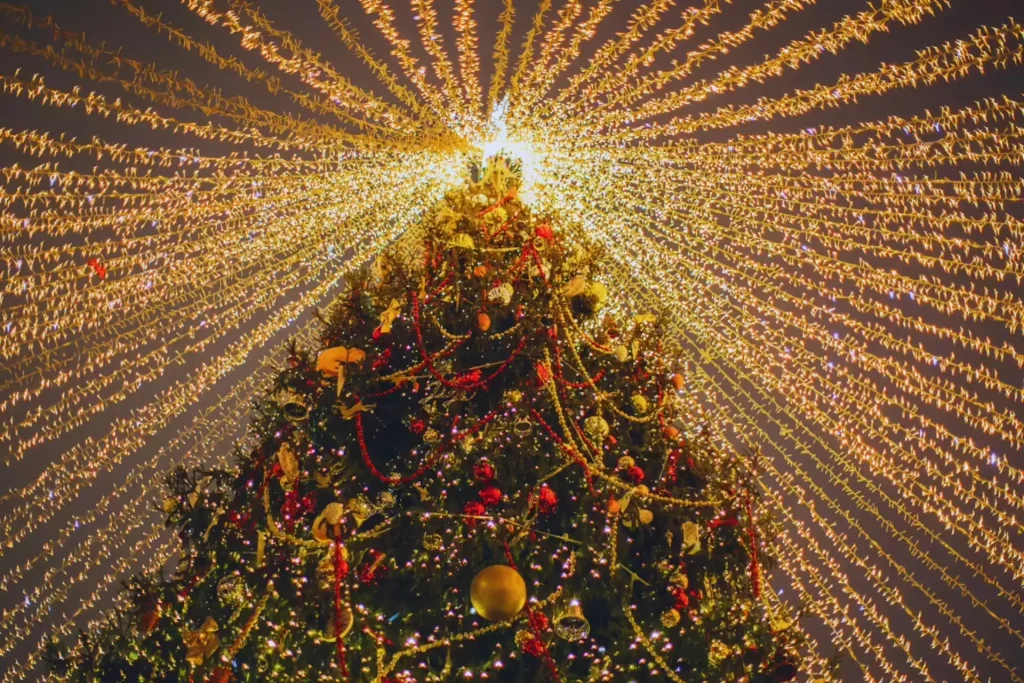
Christmas in India may surprise many travelers. While the country is widely known for its Hindu festivals, many parts of India celebrate Christmas with just as much warmth. As December approaches, streets, homes and churches begin to glow with lights, hanging stars and decorated Christmas trees.
The festive mood usually starts a few days before December 25. Families prepare special meals, exchange gifts and attend midnight prayers. Churches turn into lively meeting places where people sing carols, share food and celebrate together. Even people from different communities often join the festive mood, which reflects the inclusive spirit of many festivals in India.
For travelers, Christmas here feels both familiar and refreshingly different. You might hear the classic Christmas song, “Jingle Bells, Jingle Bells” while also tasting local sweets and homemade cakes. It is a simple reminder of how traditions from around the world can blend beautifully with local culture.
Best places to experience Christmas in India
- Goa
- Kochi
- Shillong
- Shimla
Interesting facts about Christmas in India
- The Coca-Cola connection: The modern red suit image of Santa Claus became popular through 1930s advertisements by The Coca-Cola Company.
- Jingle Bells origin: The famous Christmas song Jingle Bells was originally written for a Thanksgiving concert under the title “One Horse Open Sleigh”.
- Christmas once illegal: In the US, Christmas was actually banned in Boston from 1659 to 1681, as it was considered a rowdy and non-religious celebration.
- Christmas in space: In 1965, astronauts aboard Gemini 6 played “Jingle Bells” in space using a harmonica and sleigh bells.
Mahashivratri: The night of Lord Shiva
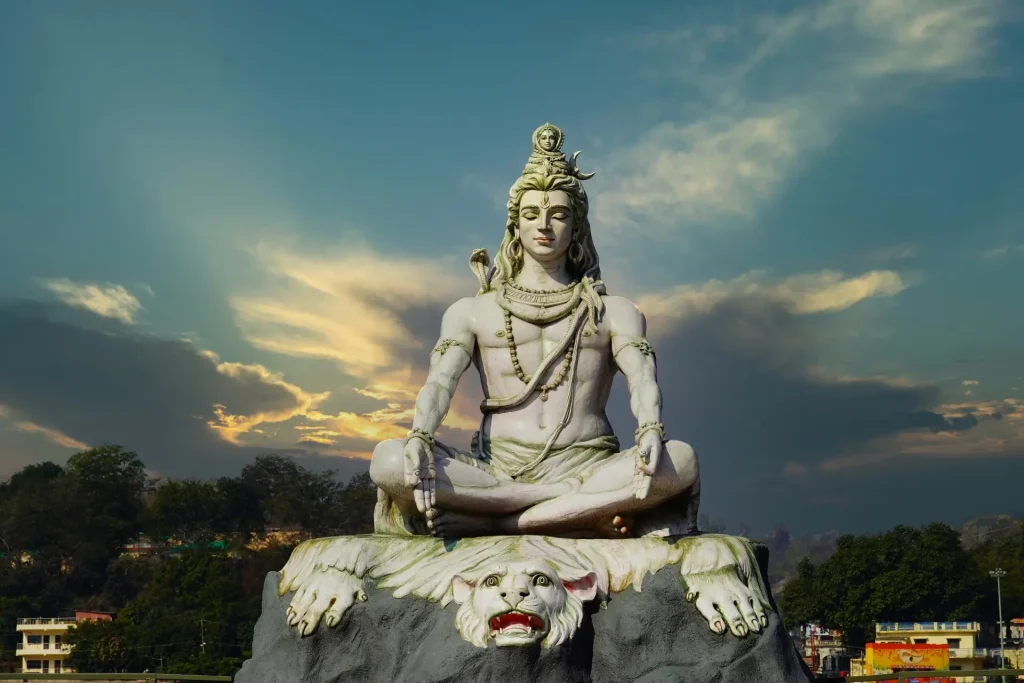
Maha Shivaratri is a famous Hindu festival in India. The name itself means “the great night of Shiva,” and millions of people across India observe the festival with deep devotion and prayer.
On this day, many devotees keep a strict fast and stay awake all night, chanting hymns like “Om Namah Shivaya” and singing bhajans. Devotees offer bel leaves (Bilva patra), fruits, flowers and milk to the Shiva lingam.
According to Hindu mythology, Maha Shivaratri is believed to mark the divine union of Shiva and Parvati. It is said that on this day Lord Shiva married Goddess Parvati, which is why the festival holds great spiritual importance in Hinduism. Temples dedicated to Lord Shiva are beautifully decorated and special prayers are offered throughout the night.
Best places to experience Mahashivratri in India
- Varanasi
- Ujjain
- Haridwar
Interesting facts about Mahashivratri
- Divine Marriage: Many traditions say this is the sacred night when Shiva married Parvati.
- Neelkanth legend: It is believed that Shiva drank the deadly Halahal poison during the Samudra Manthan to protect the world.
- Cosmic dance (Tandava): Devotees believe Lord Shiva performs the Tandava Nritya, the dance of creation, preservation and destruction.
- Simple Offerings: Shiva is easily pleased with simple, symbolic offerings like water, milk, honey, yogurt, ghee (collectively Panchamrita) and bilva leaves.
Onam: The harvest festival of Kerala
Onam is one of the famous festivals in India, mainly celebrated in the southern state of Kerala. It is an important harvest festival for the people of Kerala, who believe that Onam signifies the homecoming of the beloved king Mahabali. The Onam festival in India is celebrated for ten days during the harvest season in Kerala.
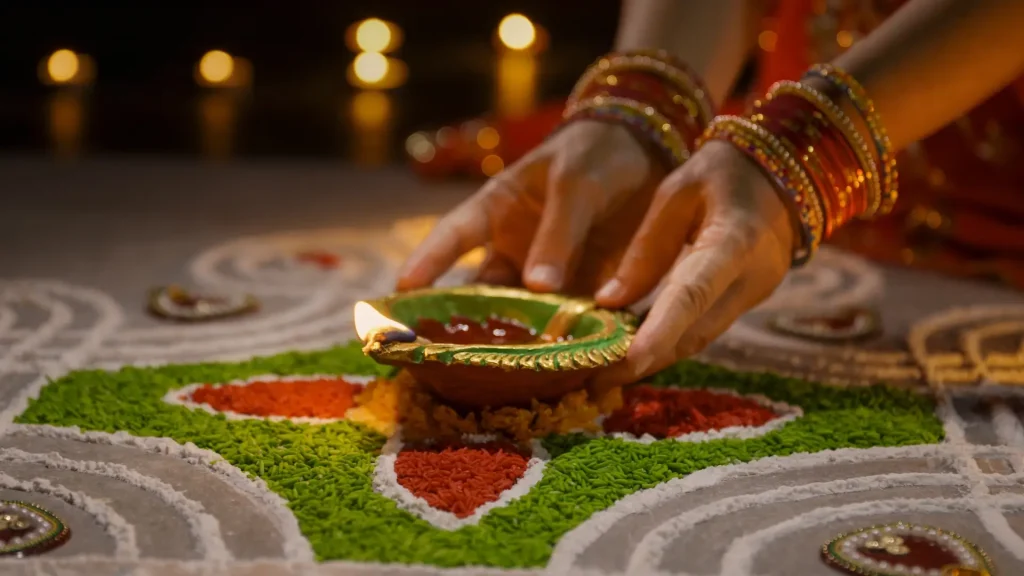
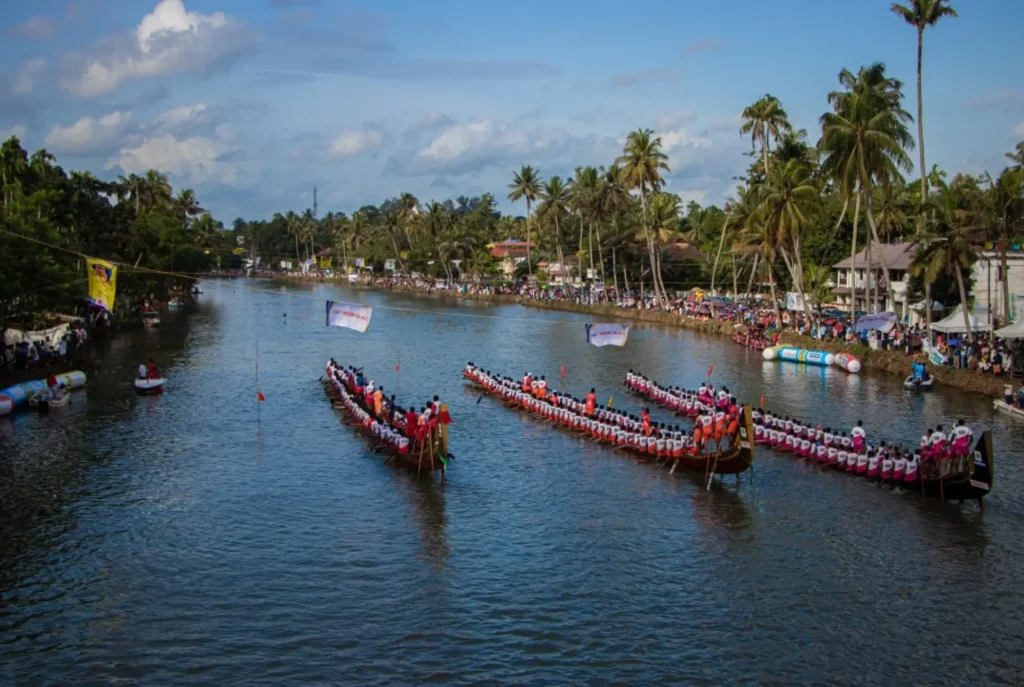
The celebrations include street carnivals, traditional dances such as Pulikali (Tiger Dance), folk music and the famous Vallam Kali (snake boat race). During this time, people decorate their homes and create beautiful flower rangoli called Pookalam. Families also prepare the traditional Onasadya, a special meal with many dishes served on a banana leaf and shared with family, friends and relatives.
Like many major festivals in India, Onam has a mythological story behind it. It is believed that King Mahabali was a devotee of Lord Vishnu. He conquered all three worlds (Earth, heaven and the netherworld), making the Devas (gods) insecure.
To test his devotion, Lord Vishnu took the form of a dwarf, Vamana and asked for three steps of land, to which Mahabali agreed. Once Mahabali agreed, Vamana took a gigantic form and covered the earth in one step and heaven in another and for the third step, King Mahabali offered his head.
Impressed by his devotion and honesty, Lord Vishnu rewarded him by giving him the boon that after he was dead, he could return to his land once a year. Onam is celebrated as the return of their beloved king.
Best places to experience Onam in India
- Alleppey
- Thrissur
- Thiruvananthapuram
Interesting facts about Onam
- Pookkalam (Flower Carpets): Colorful floral designs are created at home entrances to welcome King Mahabali.
- Onasadya (The Feast): A grand vegetarian feast with around 26 to 30 dishes is served on a banana leaf.
- Vallam Kali (Snake Boat Race): Gigantic, 100-foot-long boats are rowed by over 100 oarsmen, a major highlight in Kerala’s rivers.
- Pulikali (Tiger Dance): Performers paint their bodies like tigers and dance to traditional drum beats.
Makar Sankranti and Pongal
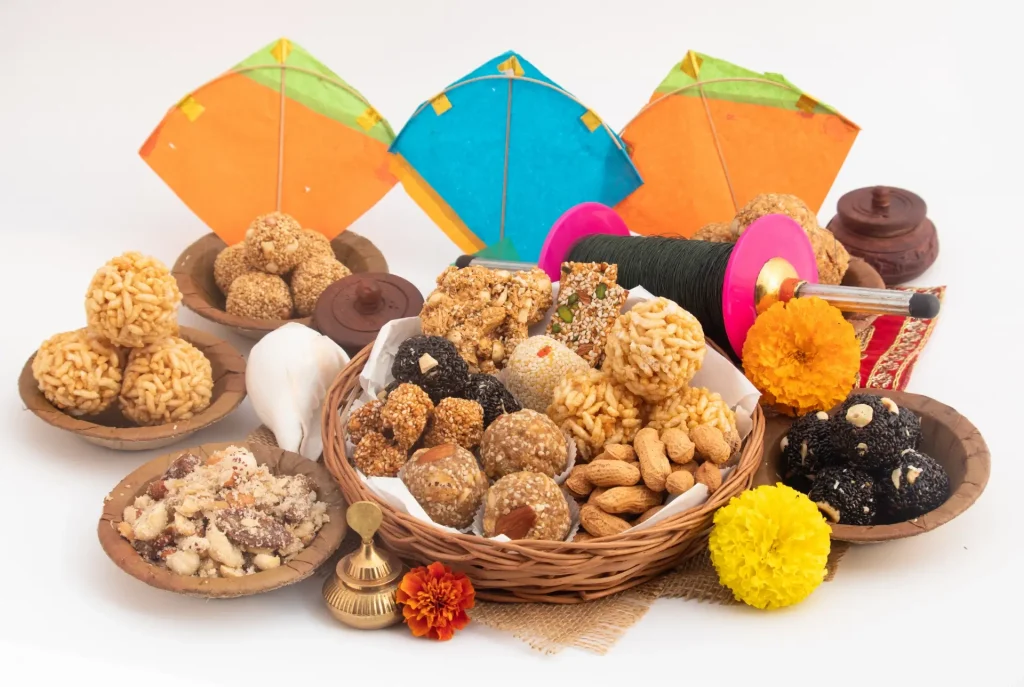
Makar Sankranti and Pongal are important harvest celebrations and are counted among the major festivals in India. Both festivals usually fall in mid-January and mark a seasonal change when the Sun begins its northward journey. This time also brings the end of the cold winter days and the start of longer, warmer days.
Makar Sankranti, also known as Uttarayan, is widely celebrated across India and marks the Sun’s movement into the zodiac sign Capricorn. On this day, people thank Surya, the Sun God, for a good harvest and pray for prosperity and happiness.
In many parts of India, Makar Sankranti is also famous for the excitement of kite flying. From cities to small towns, people gather on rooftops and open grounds to fly colorful kites. The sky often fills with hundreds of kites and friendly competitions between families and neighbors add to the festive mood.
Pongal, mainly celebrated in Tamil Nadu, is a four-day harvest festival that includes Bhogi Pongal, Surya Pongal, Mattu Pongal and Kaanum Pongal. Farmers thank the Sun and their cattle for helping them grow crops.
Although the names and customs may differ, both Makar Sankranti and Pongal celebrate the harvest season, gratitude for nature and the joy of community gatherings across India.
Best places to experience these festivals
- Ahmedabad
- Jaipur
- Chennai
- Madurai
Interesting facts about these festivals
- Kite Flying Tradition: Skies fill with colorful kites in places like Gujarat and Rajasthan to celebrate the changing season.
- Mythological connection: It is believed that on this day, Lord Surya (Sun God) visits his son Shani (ruler of Capricorn).
- Solar calendar focus: Unlike most Hindu festivals based on the lunar calendar, Makar Sankranti is based on the solar cycle, usually falling on January 14th.
- Different regional names: It is celebrated throughout India under different names: Lohri (Punjab/Haryana), Pongal (Tamil Nadu), Magh Bihu (Assam) and Khichdi (Uttar Pradesh/Bihar).
Pushkar Camel Fair
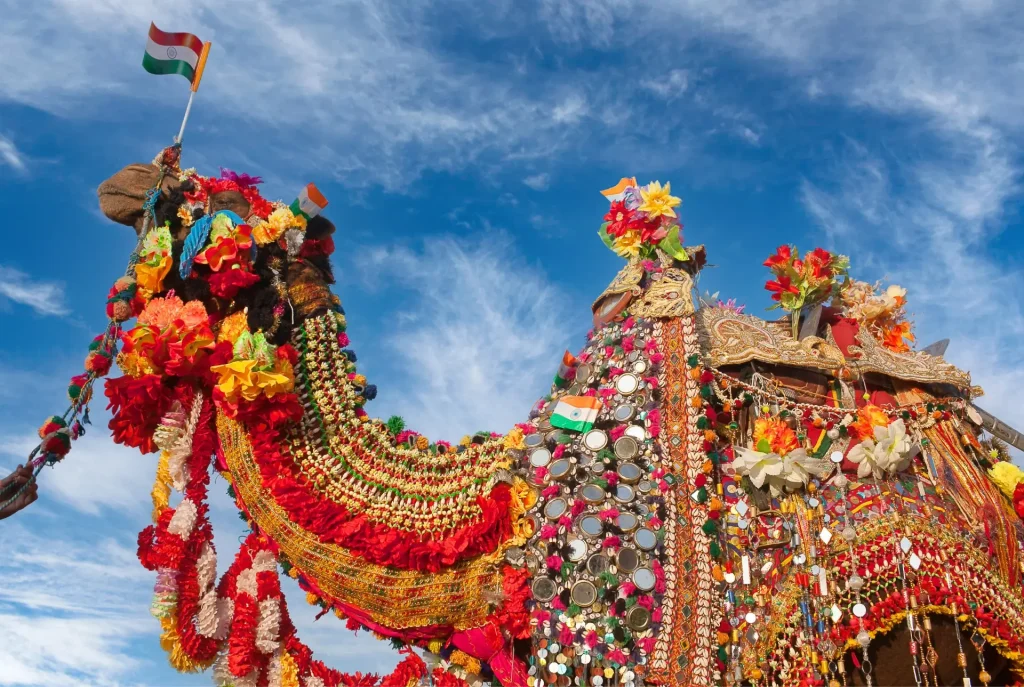
Pushkar Fair, also known as the Pushkar Camel Fair or Pushkar Mela, is one of the famous cultural festivals in India. It takes place every year in Pushkar near Ajmer in Rajasthan, usually between October and November. This 5-day event is known as one of the largest cattle fairs in the world and brings together cattle traders, pilgrims and tourists from many places.
The fair began as a cattle trading event where people buy and sell camels, horses, cows and bulls. Camels are the main attraction, which is why the festival is often called the Pushkar Camel Fair. During the festival, the small town of Pushkar becomes lively with markets, colorful tents and traditional Rajasthani culture.
According to Hindu belief, the festival also takes place around the sacred day of Kartik Purnima. Many pilgrims visit the holy Pushkar Lake to take a ritual bath and pray at the famous Brahma Temple, dedicated to Brahma.
Along with trading and religious activities, the fair also includes fun events like matka phod contests, longest mustache competitions and even friendly football matches, making it one of the unique festivals in India.
Best places to experience the Pushkar Camel Fair
- Pushkar
Interesting facts about Pushkar Camel Fair
- Massive scale: Held for about 5 days, the Pushkar Camel Fair attracts farmers, traders and tourists in huge numbers.
- Cultural and sporting events: The fair features camel beauty contests, camel dances, turban-tying competitions and fun games like matka phod.
- Cultural fusion: Nomadic communities such as the Raika gather with travelers from around the world in Pushkar.
- Unique competitions: Visitors often enjoy quirky events like the longest mustache contest and traditional rural games like Sapoleia.
Kumbh Mela: The largest religious gathering in the world
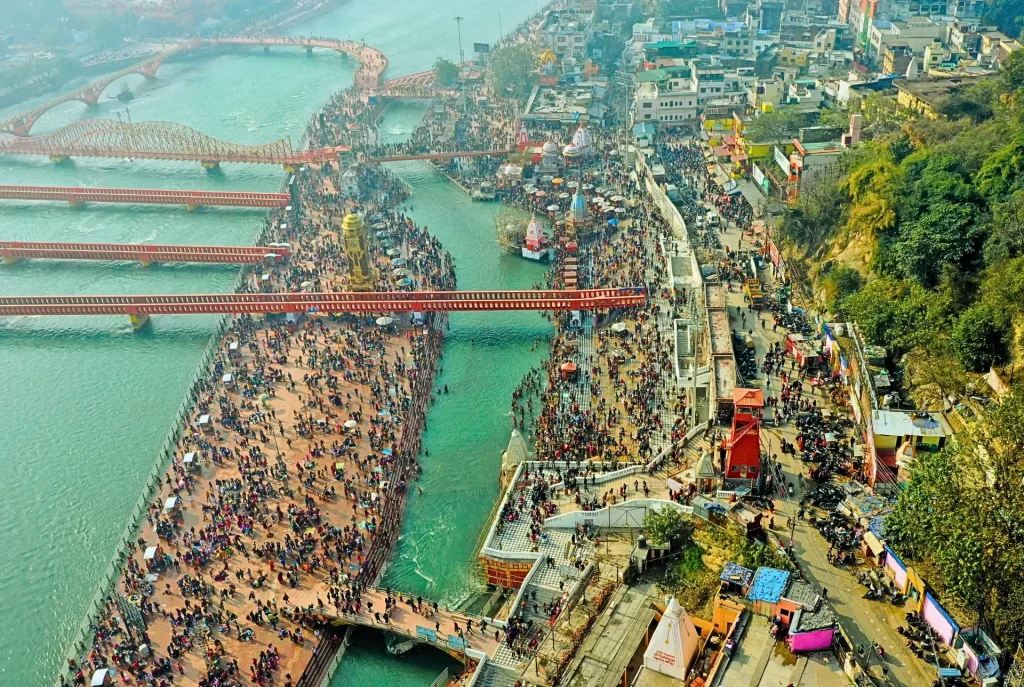
The Kumbh Mela is often called the largest religious gathering on Earth. When the festival begins, millions of pilgrims, saints and curious travelers arrive together, turning the entire area into a massive sea of devotion and activity.
The festival is deeply rooted in Hindu mythology and is connected to the story of the pot of nectar, known as Amrit, that appeared during the churning of the cosmic ocean. Devotees believe that taking a ritual bath in the holy river during the festival can cleanse past sins and bring spiritual blessings.
One of the most memorable moments is watching the processions of saints and spiritual leaders moving toward the river. The energy builds as crowds gather along the banks, waiting for the sacred bathing ritual to begin. When thousands of devotees step into the water together, the scene feels powerful and deeply emotional.
For anyone curious about festivals in India, the Kumbh Mela offers a rare chance to witness a living tradition that has been practiced for centuries. The sheer scale of the gathering and the strength of faith you see here are difficult to describe until you witness it yourself.
Best places to experience Kumbh Mela
- Prayagraj
- Haridwar
- Ujjain
- Nashik
Interesting facts about Kumbh Mela
- 4 sacred locations: The Kumbh Mela rotates between Prayagraj (Triveni Sangam of Ganga, Yamuna and Saraswati), Haridwar (Ganga), Ujjain (Shipra) and Nashik (Godavari).
- Sacred cycles: The festival follows a cycle with Kumbh every 3 years, Ardh Kumbh every 6 years, Maha Kumbh every 12 years and a rare grand Maha Kumbh after 144 years.
- Mythological origin: The word “Kumbh” refers to the pot of nectar called “Amrit” from the legend of a fight between gods and demons for this nectar, during which four drops fell at these locations.
- Naga Sadhus: Mystic monks known as Naga Sadhus appear during the festival and lead the first holy bath called Shahi Snan.
- 2025 mega event: The 2025 Maha Kumbh in Prayagraj is expected to attract over 400 million people and feature 180,000 tents.
How you can experience festival tourism in India
Festivals in India are not something you simply watch. You feel them. The music in the streets, the lamps along the river, the colors in the air. Somehow all of it pulls you into the moment.
Picture yourself standing in a lively crowd during Holi as colors fill the sky. Or watching thousands of glowing lamps during Dev Deepawali along the holy Ganges. These are the kind of moments that stay with you long after the trip ends.
India celebrates hundreds of festivals every year. From the spiritual gatherings of Kumbh Mela to the vibrant cultural celebrations like the Pushkar Camel Fair, every festival offers a different side of the country’s traditions.
But here is something most travelers realize only after they start planning. Festivals in India can be overwhelming if you do not know the right places, the right timing, or how the rituals work. A little local guidance can completely change the experience.
That is where Varanasi Excursion can help. The team helps travelers explore festivals across India with local insight, comfortable planning and experiences that go beyond the usual tourist routes.
✨ If you have ever dreamed of seeing India during its most vibrant celebrations, this might be the perfect time to plan it.
👉 You can explore festival tours, spiritual journeys and cultural trips through Varanasi Excursion and experience these traditions in a more meaningful way.
📩 If you want help planning your festival trip in India, visit the contact us or call us at +91 9005104999.
Sometimes the best way to understand a culture is simply to celebrate it alongside the people who live it every day.
FAQs about festivals in India
India officially celebrates three national festivals each year. These are Independence Day (India) on 15 August, Republic Day (India) on 26 January and Gandhi Jayanti on 2 October.
These days are not just holidays on the calendar. They mark important moments in the country’s journey and also remember the legacy of Mahatma Gandhi. Across India, people celebrate with flag hoisting, parades and community events that reflect a strong sense of national pride.
Ask anyone about the most famous festival in India and you will probably hear one answer first: Diwali.
During Diwali, homes glow with rows of small oil lamps called “diyas,” families exchange sweets and markets stay busy late into the night. The festival of lights carries a special energy that you can feel almost everywhere in the country.
It is almost impossible to count the exact number. India celebrates hundreds of festivals every year because the country is home to many religions, cultures and regional traditions.
Some of the most widely known include Holi, Diwali, Eid and Navratri. In many places, it feels like there is always a celebration happening somewhere.
Festivals are a big part of everyday life in India. They bring families together, reconnect communities and keep traditions alive from one generation to the next.
Food, music, prayers and colorful decorations all become part of the celebration. For many people, festivals are also a chance to slow down for a moment, spend time with loved ones and celebrate the stories and beliefs that shape Indian culture.